IDAS DTD (Dusk to Dawn)
From dusk to dawn. Suppresses artificial light pollution (LED, Na, Hg) and natural airglow while preserving true RGB colors and contrast of galaxies and reflection nebulae.
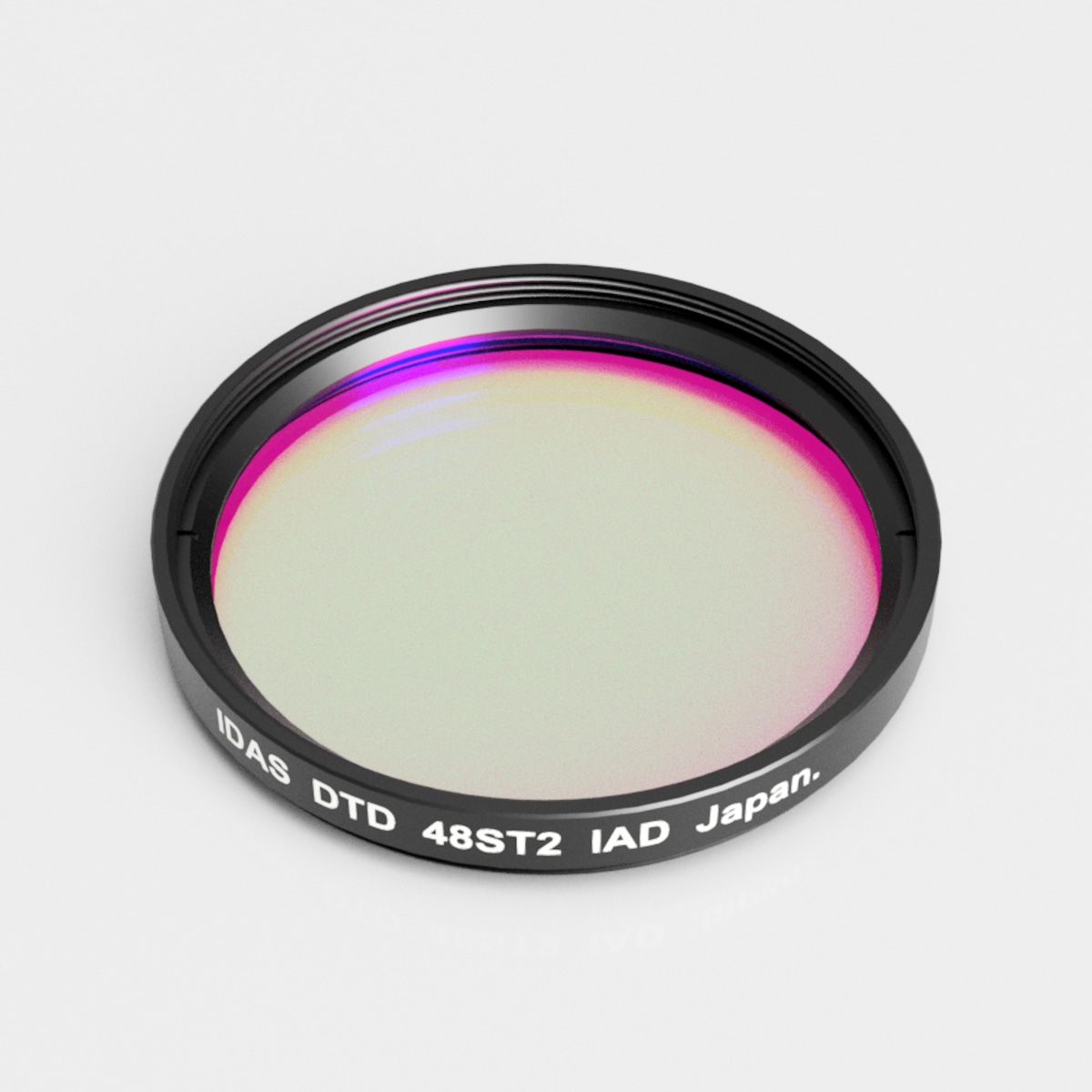
Dual Nightglow & Light Pollution Suppression with True Color Balance
IDAS DTD (Dusk to Dawn) is a next-generation broadband optical filter that fuses visible and near-infrared (NIR) wavelengths to deliver breathtaking contrast across comets, galaxies, nebulae, and the Milky Way.
Most urban light pollution concentrates in visible wavelengths below 600nm, whereas almost no artificial light pollution exists in the near-infrared spectrum above 630nm to 700nm+. Leveraging this physical principle, DTD selectively blocks urban light pollution and natural atomic oxygen airglow (557.7nm & 630.0nm) that hazes dark skies. By generously passing the clean NIR band, background noise is minimized while the continuous celestial spectrum is captured with overwhelming contrast.
Even under pristine dark mountain skies, Earth's upper atmosphere continuously emits subtle natural airglow. DTD precisely blocks these specific airglow lines, delivering dark background skies and exceptionally high-contrast astrophotography during long exposures.
Superb Celestial Target Compatibility & Rich Color Fidelity
* Principle of Light Pollution Cut & Utilization of Near-Infrared (NIR)
Most urban light pollution occurs predominantly in the visible range below 600nm (low/high-pressure sodium, mercury vapor, white LEDs, and 557.7nm airglow). In contrast, artificial light pollution is virtually nonexistent in the near-infrared (NIR) region above 630nm to 700nm+.
IDAS DTD pinpoints and blocks the vulnerable pollution bands while generously transmitting the pollution-free NIR region, suppressing background noise to capture celestial continuous spectra with extraordinary contrast.
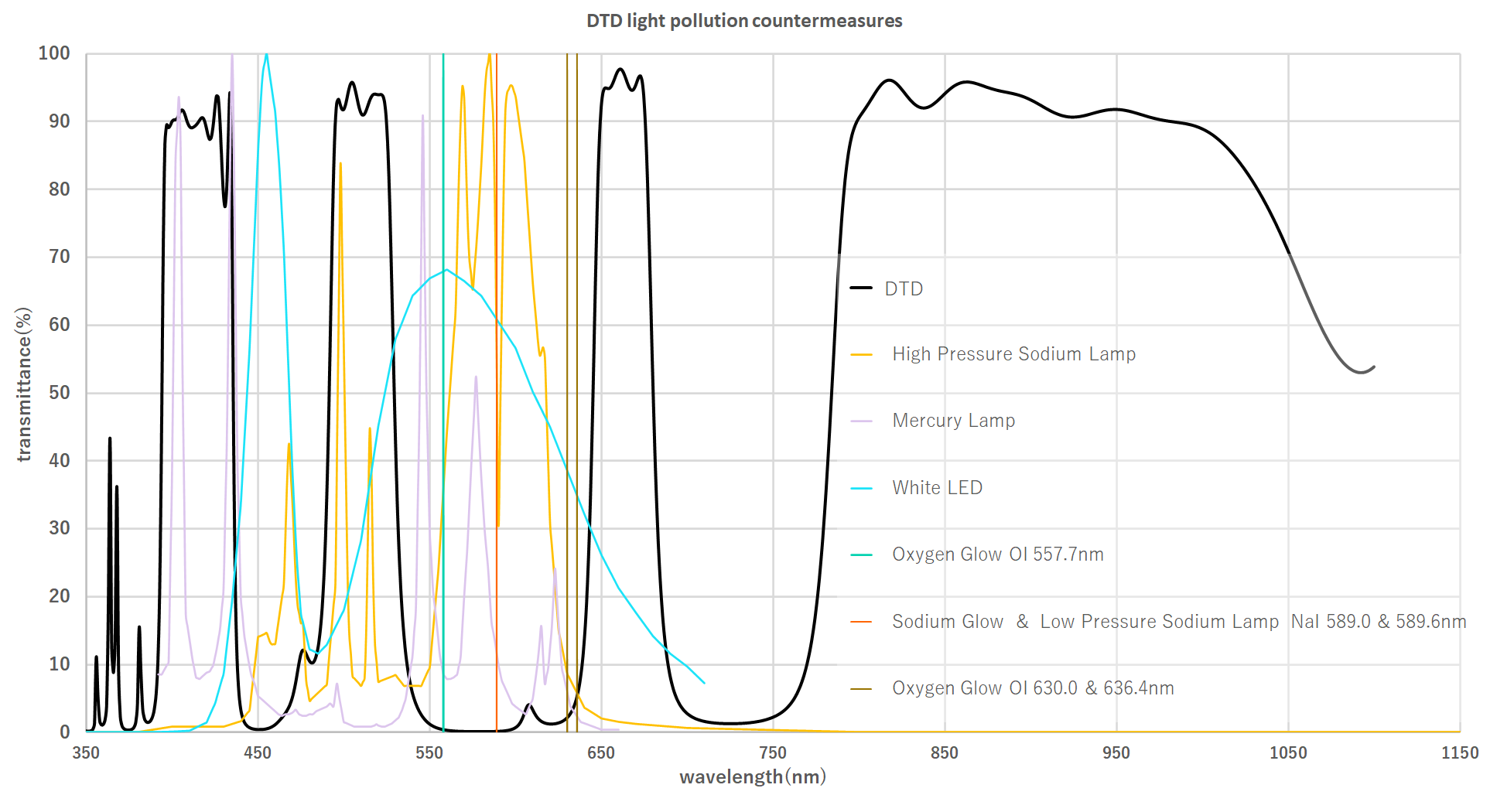
* DTD spectral transmission vs. urban light pollution & airglow spectra (blocking pollution below 600nm while utilizing the clean NIR band)
* Outstanding Comet Compatibility (C2 Cyan Coma, CO+ Plasma Tail & NIR Dust Tail)
DTD's proprietary transmission bands faithfully capture the cyan coma (C2 Swan band ~516nm), blue ion plasma tail (CO+ ~426nm), and the solar-reflecting continuous dust tail.
Furthermore, even under low-altitude haze or misty conditions, utilizing NIR wavelengths that resist atmospheric scattering cuts background fog and reveals delicate comet structures with razor-sharp clarity.
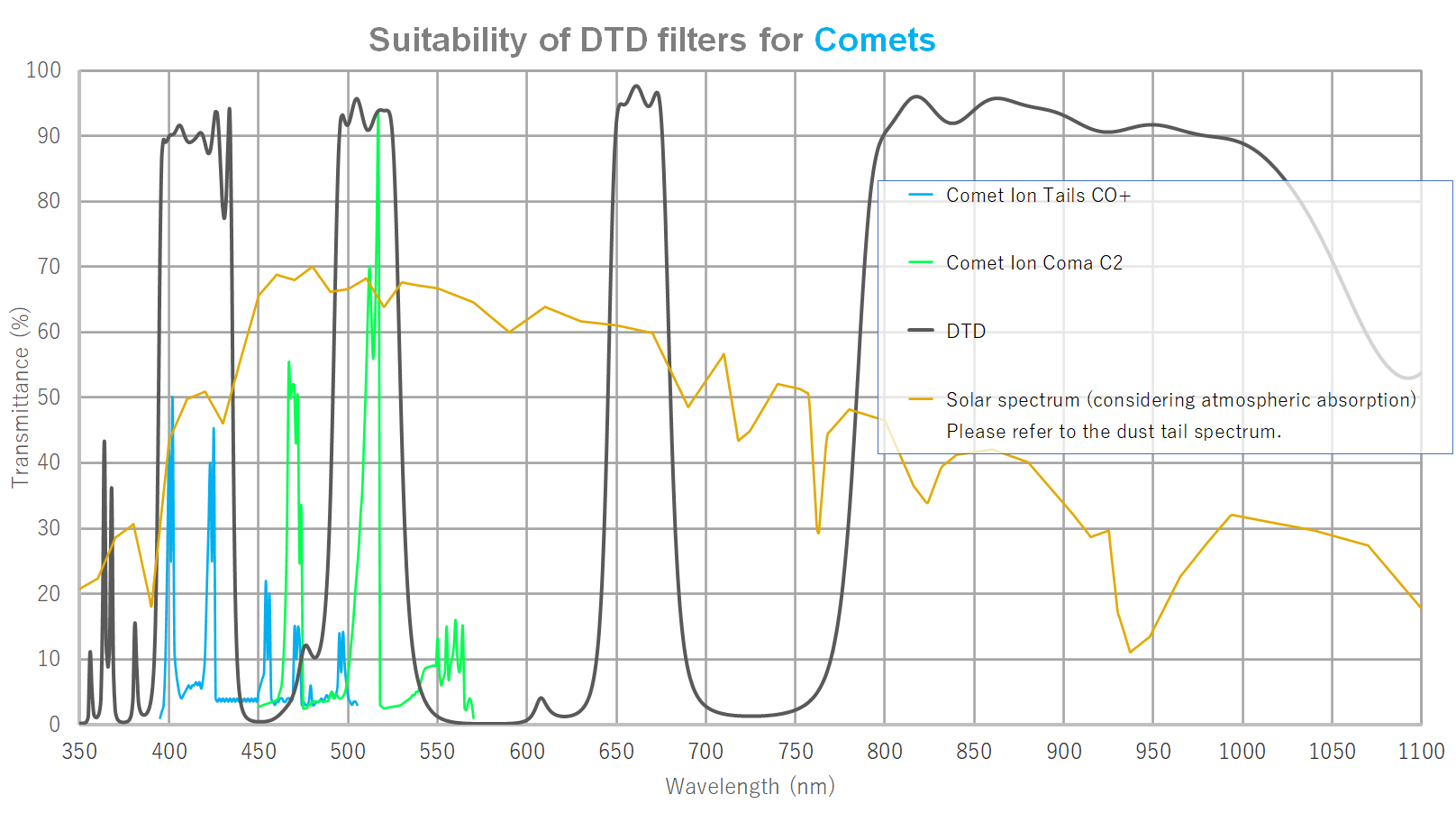
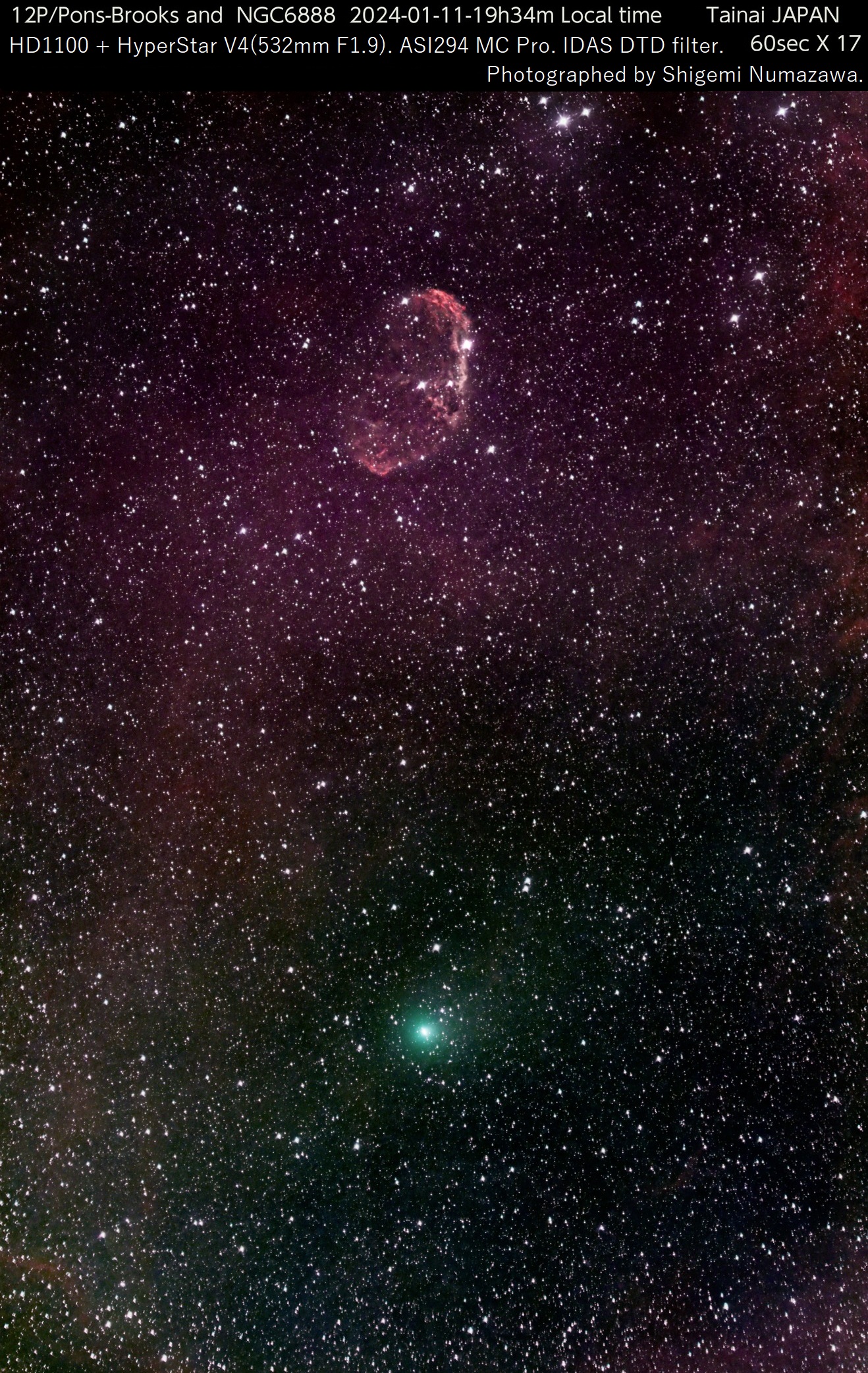
* Balanced capture of cyan coma (C2), blue ion tail (CO+), and broadband dust tail reflection.
* Superb for Emission & Reflection Nebulae, Molecular Clouds, Galaxies & Clusters
For emission nebulae and supernova remnants emitting Hα (656.3nm) and OIII (495.9/500.7nm), DTD provides dramatic contrast enhancement through semi-narrow visible bands.
Simultaneously, its expansive overall visible-to-NIR transmission minimizes light loss on continuous-spectrum targets — such as reflection nebulae, dark molecular clouds, galaxies like Andromeda (M31), and star clusters — which often suffer severe color shift and photon starvation under conventional dual-band filters.
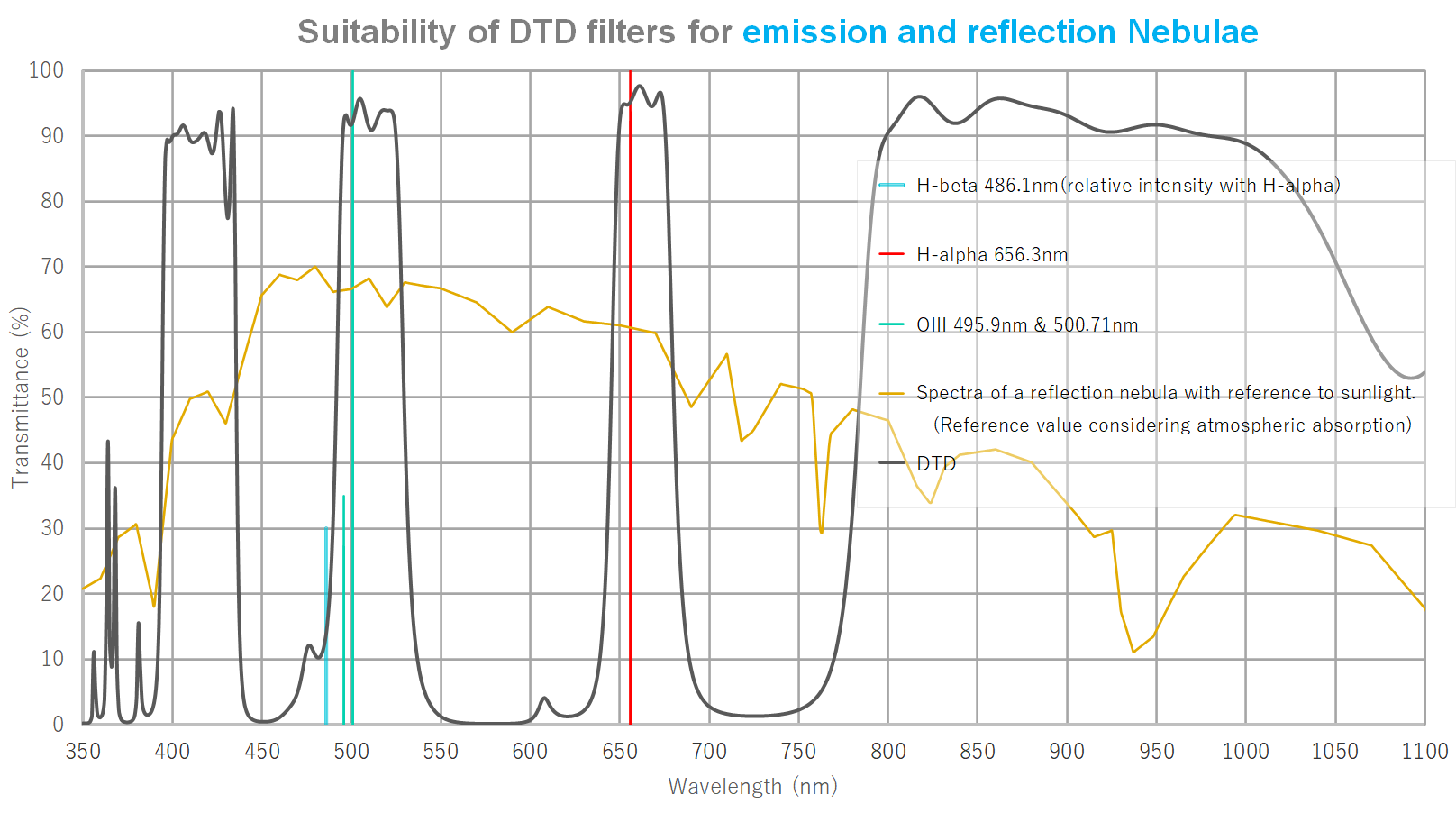
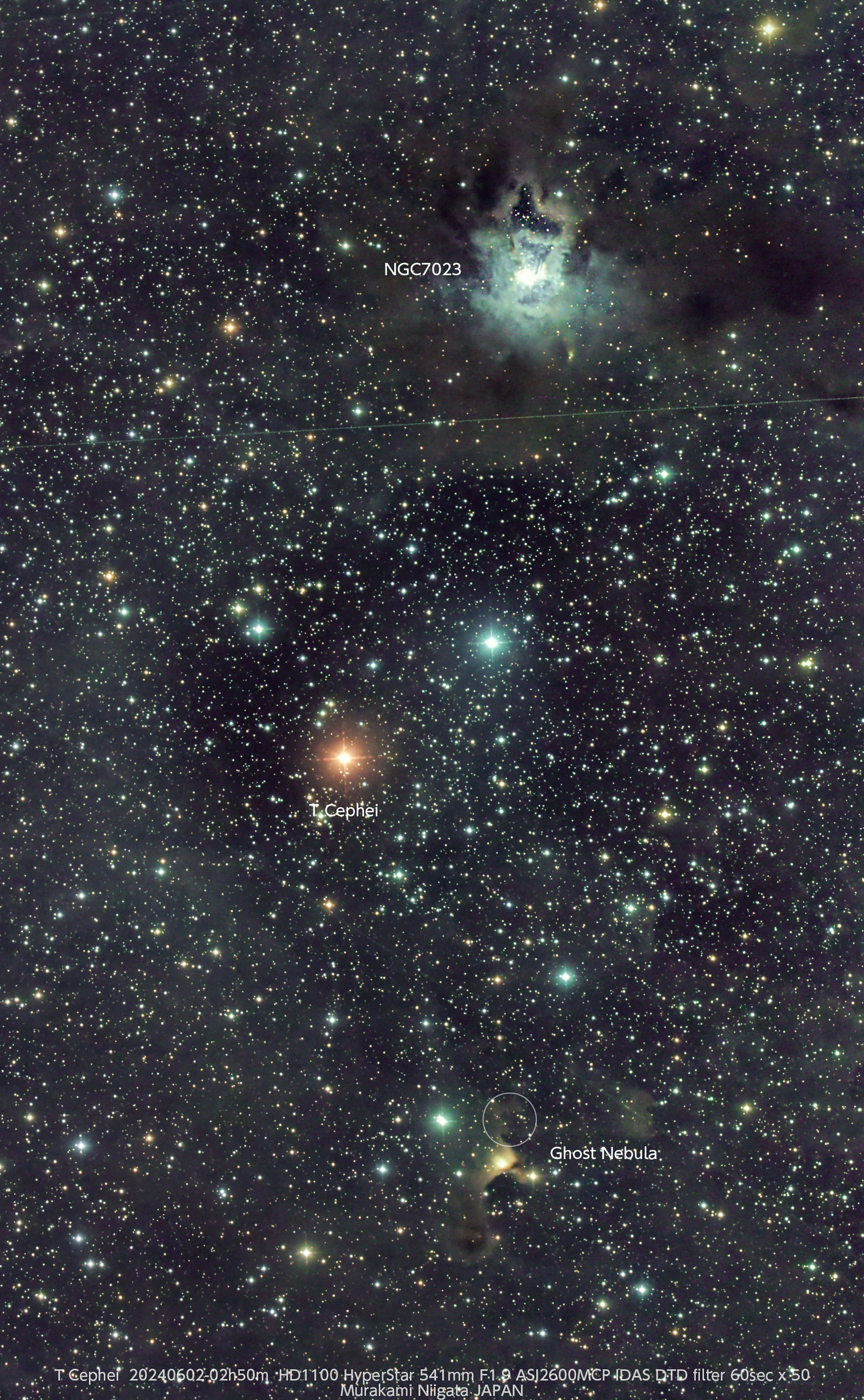
* Combines high contrast on emission nebulae with delicate tonal gradation on faint reflection nebulae & molecular clouds.
* Enhanced Color Fidelity (Optimal RGB Sensor Utilization & DTD vs GNB)
DTD's visible spectral characteristics are optimized to fully harness the RGB sensitivity of color sensors (CMOS).
While our Nebula Booster series (NBZ-II, GNB) and other dual-band filters heavily restrict the B-channel to maximize light-pollution cutting, they can restrict blue-to-cyan gradations and star colors.
DTD supplies abundant light to the B-channel, rendering rich color gradations — from natural nebula pinks, reds, and cyans to brilliant blues and core white highlights.
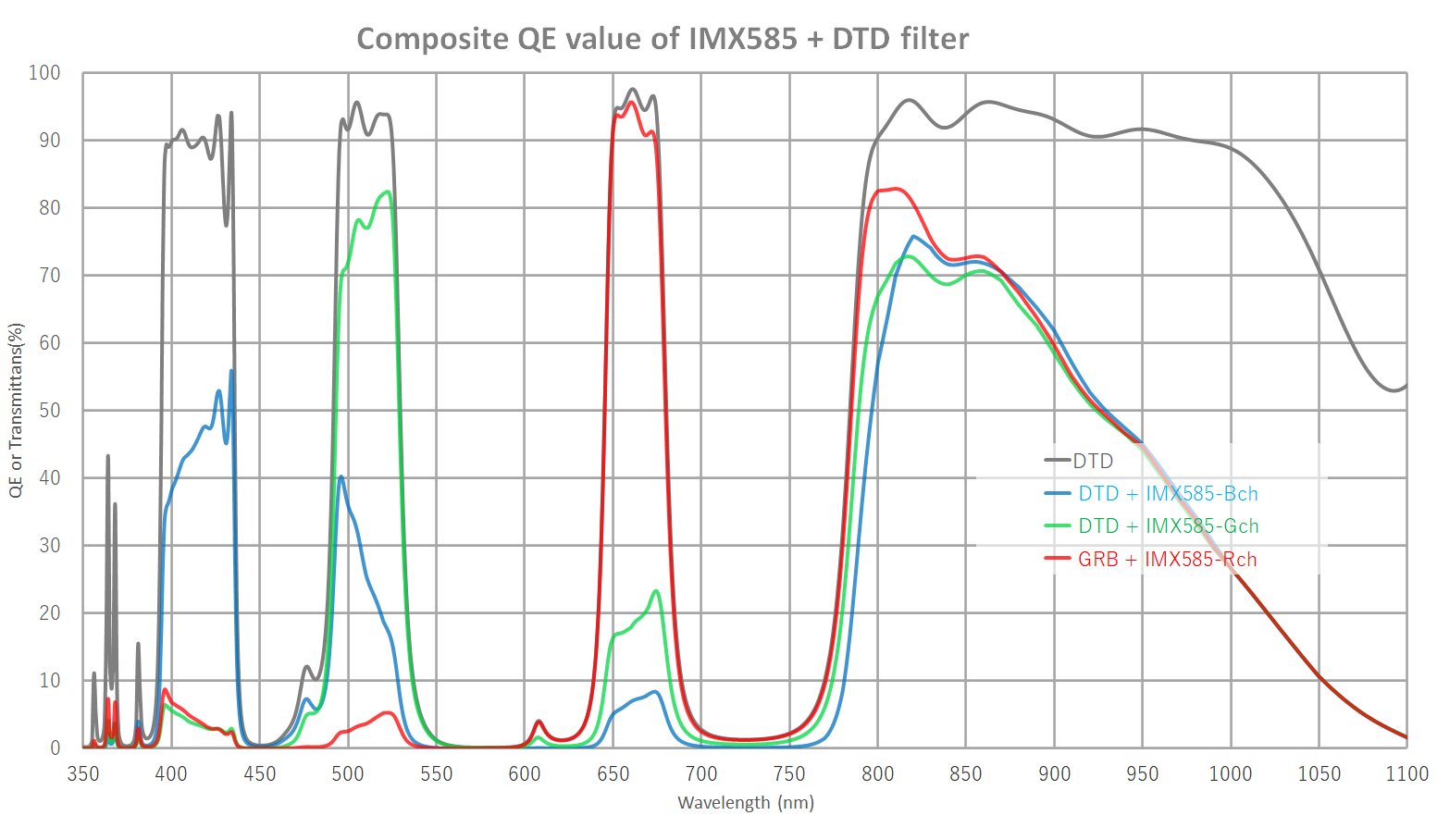
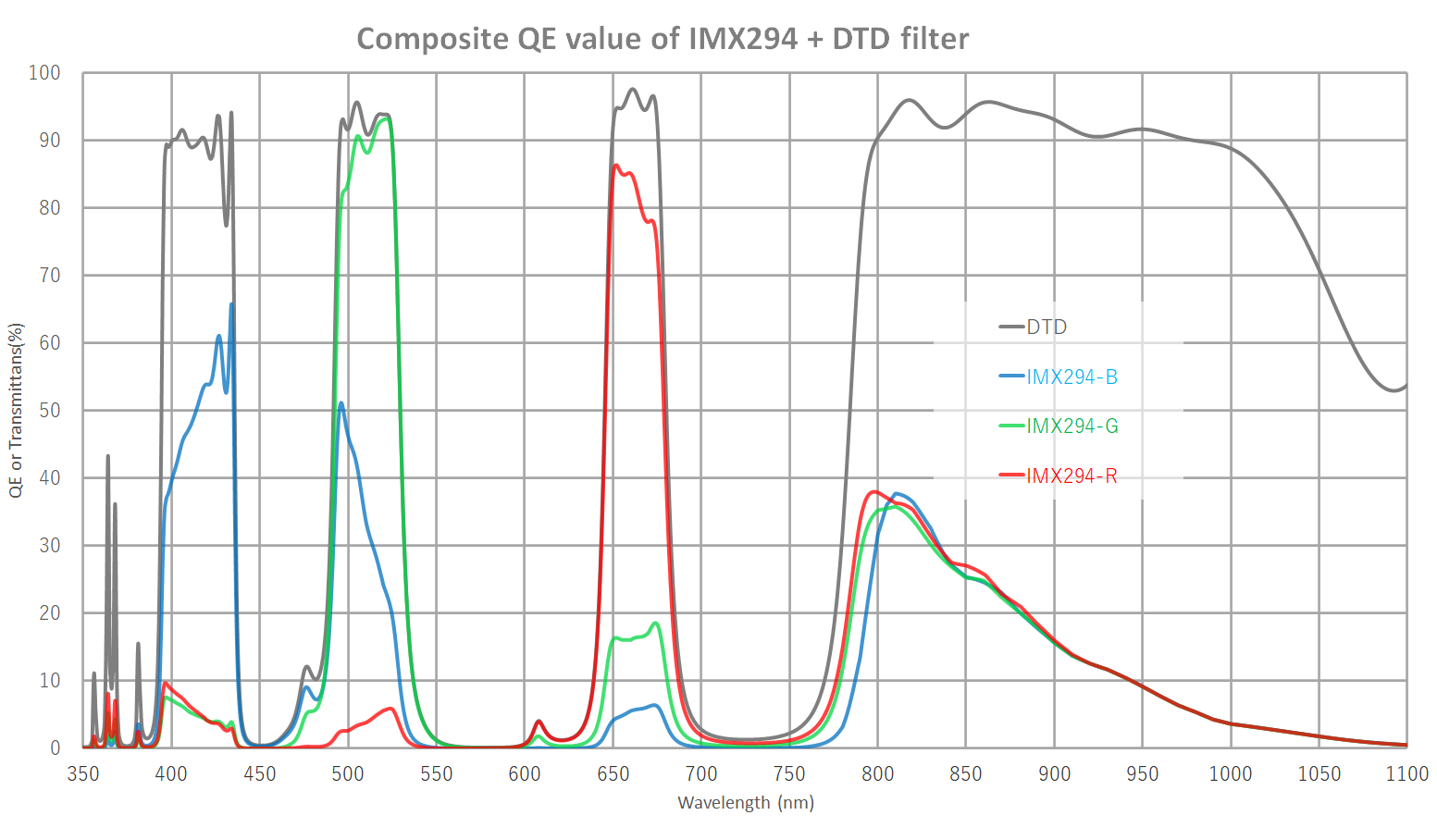
* Delivers balanced B, G, and R channel response on color CMOS sensors, preventing unnatural color casting.
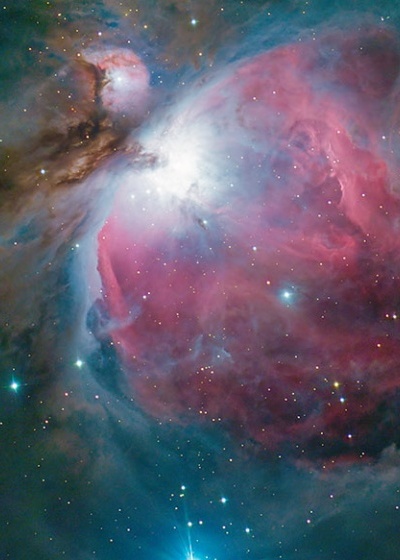
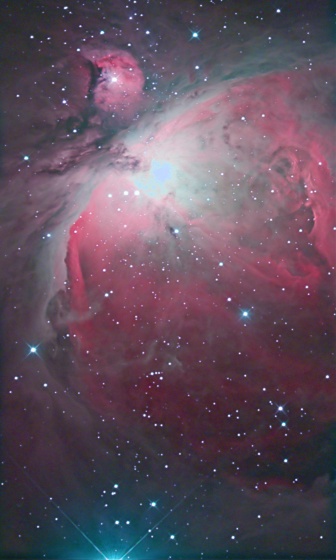
* Side-by-side comparison of Orion Nebula (M42) with DTD vs. GNB. DTD achieves a seamless, rich color gradation from the central Trapezium core to delicate blue, pink, and red hues.
DTD Filter 3 Key Strengths
Specifications & Optical Characteristics
| Filter Type | Next-Gen Broadband Natural Airglow & Light Pollution Filter (Visible + NIR Hybrid) |
|---|---|
| Primary Passbands | OIII (500.7nm), Hβ (486.1nm), Hα (656.3nm), Comet C2 & CO+ lines, Visible Broadband to NIR (700nm+) |
| Primary Blocked Bands | Natural Airglow (Atomic Oxygen 557.7nm, 630.0nm), Mercury & Sodium Lamps, LED Scatter |
| Substrate Glass | High-Precision Double-Sided Optically Polished Glass (2.0mm / 1.1mm thickness) |
| Coating | Ultra-Dense Multi-Layer Dielectric Interference Coating + Hydrophobic Oleophobic Topcoat |
| Recommended Targets | Comets (C2/CO+/dust tail), Galaxies (M31, M83), Reflection Nebulae & Molecular Clouds (NGC7023, Ghost nebula), Emission Nebulae (M42, M20, M8, NGC7000, Sh2-308) |
| Thickness | 2.0mm (M48, M54, M42) / 1.1mm (DZ, DRT, CA) |
| Compatible Cameras | Color Cooled CMOS, Astro-Modified DSLRs/Mirrorless, Mono LRGB Synthesis |
| Form Factor Formats | M48, M42 (OL7.5), M54 (OL7.5), DZ (ZWO), DRT (Canon EF-EOS R), CA (EOS APS-C) |
| Manufacturing | Made in Japan (ICAS Enterprises Optics Division) |
IDAS DTD Lineup by Mount Format
Select the optimal frame size and mount format to match your telescope, camera, or filter drawer.
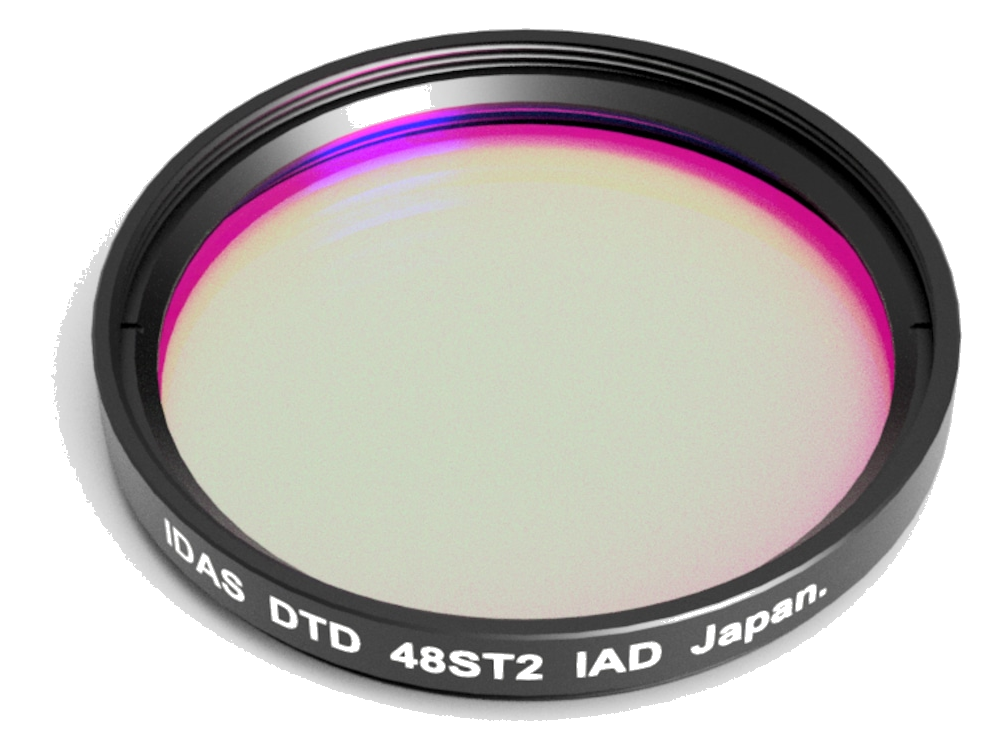
DTD 48ST2 (M48)
[Compatibility] Standard M48 P0.75 threaded mount for telescopes, reducers, and correctors.
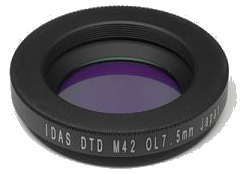
DTD M42 OL7.5
[Compatibility] Standard M42 P0.75 threaded mount. Ultra-thin 7.5mm optical length fits tight backfocus setups (including RASA 8).
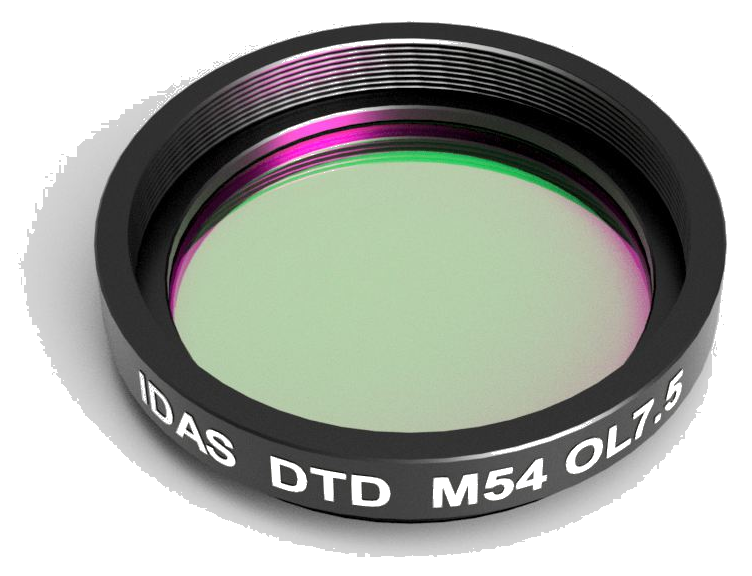
DTD M54 OL7.5
[Compatibility] Large M54 P0.75 threaded mount. 47mm clear aperture prevents vignetting on full-frame CMOS (ASI6200, etc.) and Duo cameras.
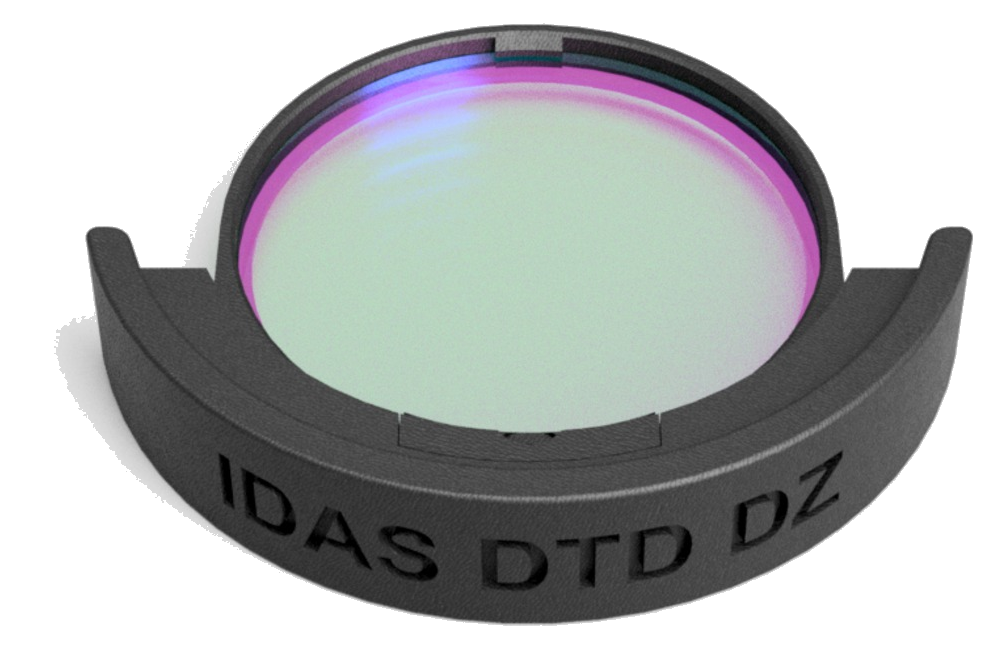
DTD DZ
[Compatibility] Direct drop-in mount for ZWO Gen-II Filter Drawers with zero frame vignetting.
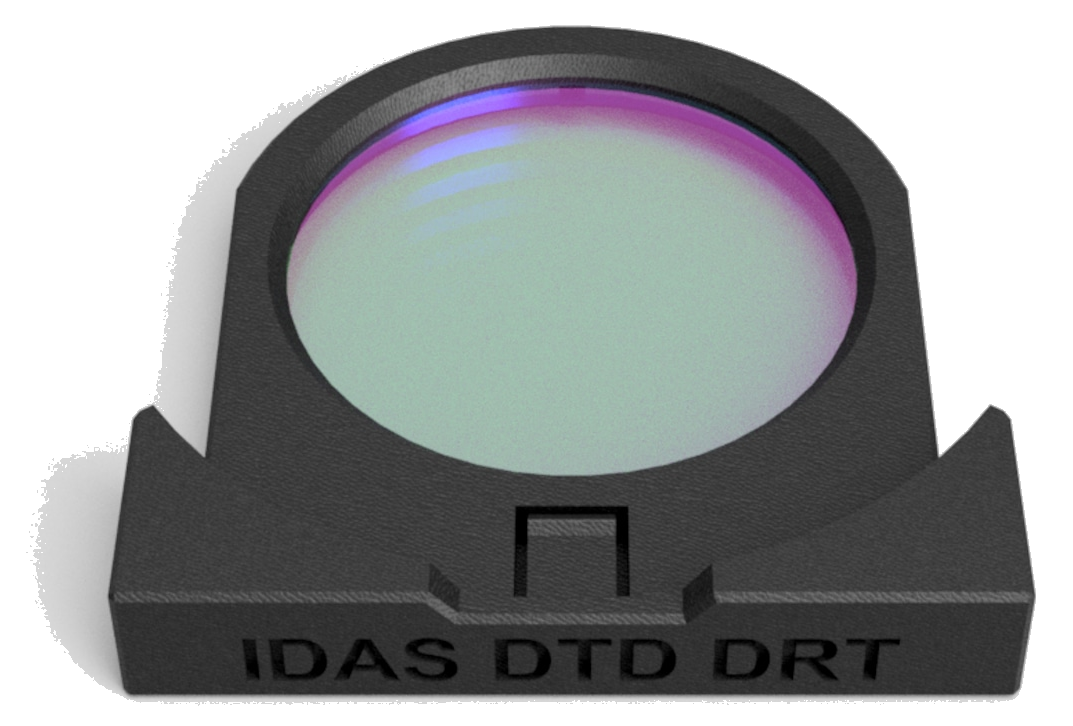
DTD DRT
[Compatibility] Dedicated for Canon Drop-in Filter Mount Adapter EF-EOS R.
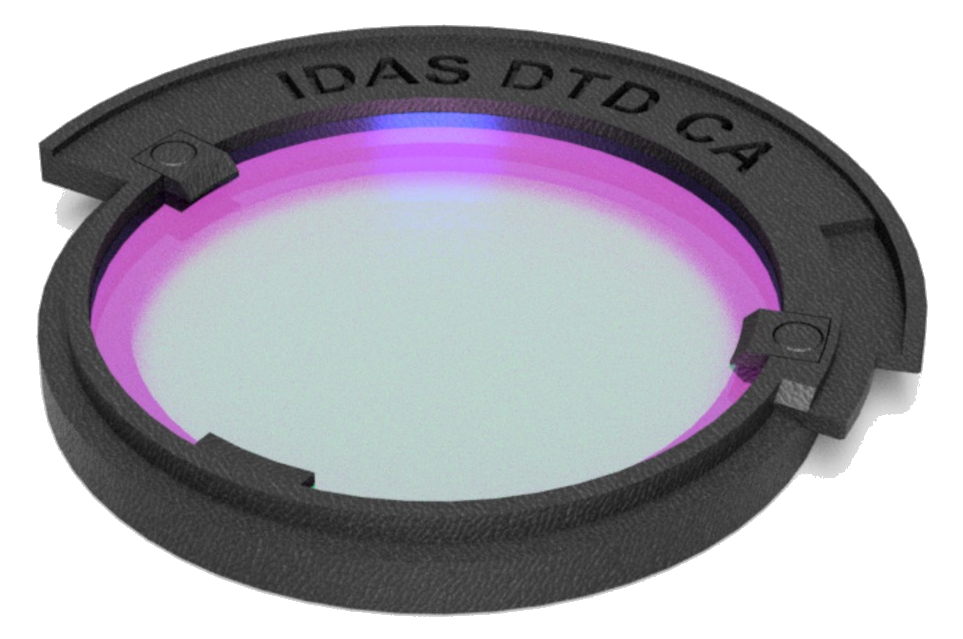
DTD CA
[Compatibility] In-body clip filter for Canon EOS APS-C DSLRs.
💡 Purchase Information & Authorized Dealers
IDAS products are available through our authorized domestic online shop (BASE), as well as authorized astronomical telescope specialty dealers worldwide. For physical demonstrations, mounting consultations, or store points, please visit your local authorized dealer.